Many of Partnership for the Delaware Estuary’s (PDE) core science programs originated at the organization’s first Science & Environmental Summit in 2005. The event focused on wetlands, bivalve shellfish, bay-bottom habitat, and other top science needs of the Delaware Estuary. Since then, PDE has expanded its surveys, monitoring, staff and research to address the growing demand for its services. You can help by going to a workshop, volunteering, reading our newsletter, or attending an upcoming summit. Our Science Director, LeeAnn Haaf, Ph.D., is happy to answer any questions you might have.
Wetlands
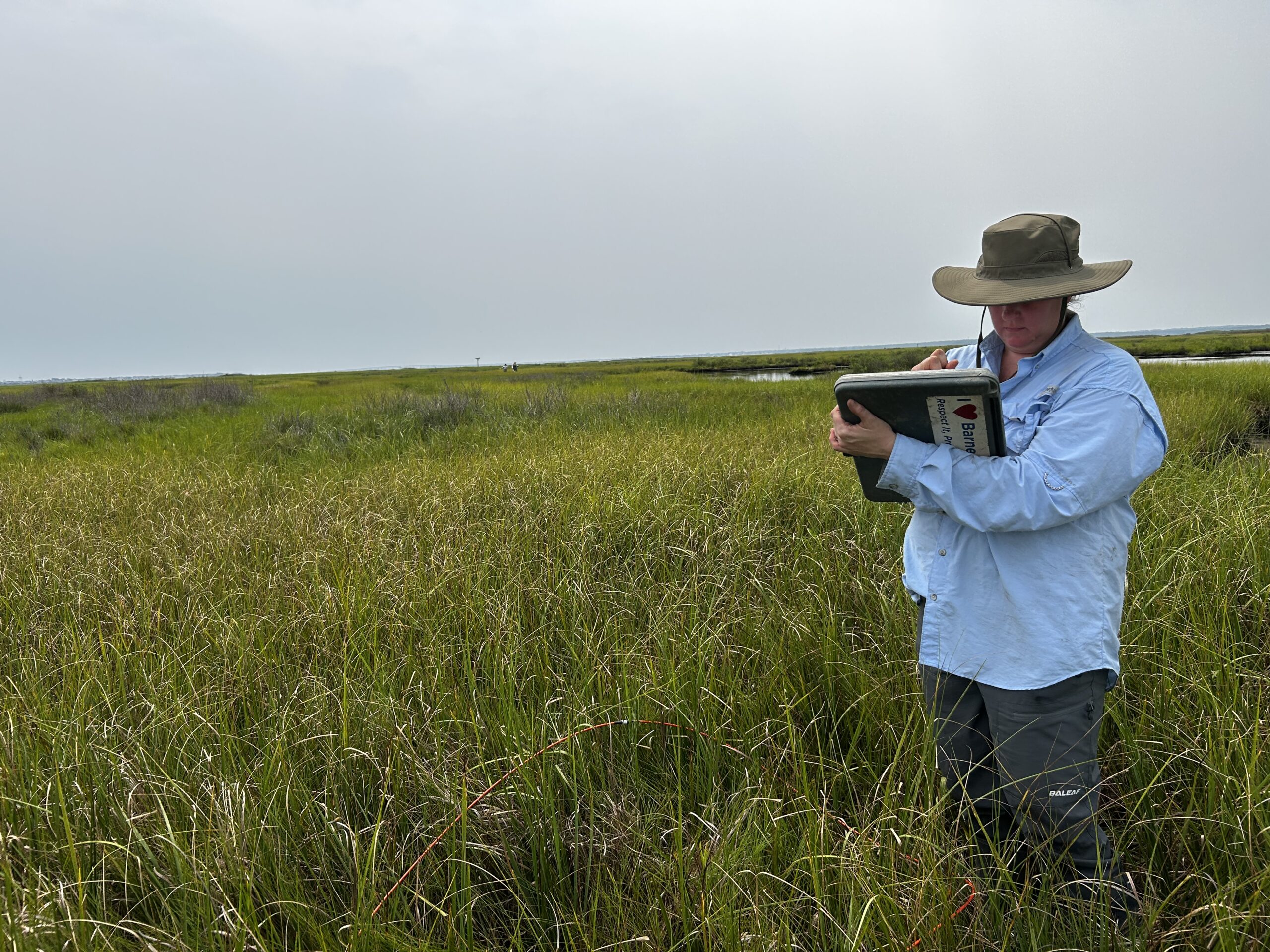
Tidal wetlands are habitats that are regularly flooded by tides— or the rising and falling of water levels associated with the moon’s gravitational force. The Delaware Estuary is unique because it has tidal wetlands from its connection with the ocean all the way to its head of tide.
Living Shorelines
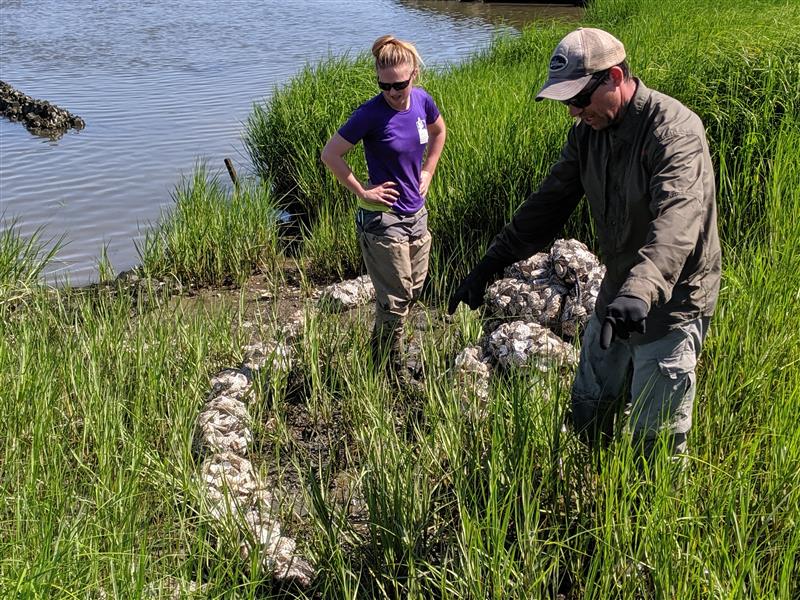
Living shorelines are engineered structures installed to control shoreline erosion and meet a variety of ecological goals. Through the thoughtful and innovative placement of materials, living shorelines can maintain the connectivity between land and water habitats while intercepting wave energy, reducing sediment and salt marsh loss, and providing habitat for a variety of fish, birds, mammals, and shellfish.
Freshwater Mussels
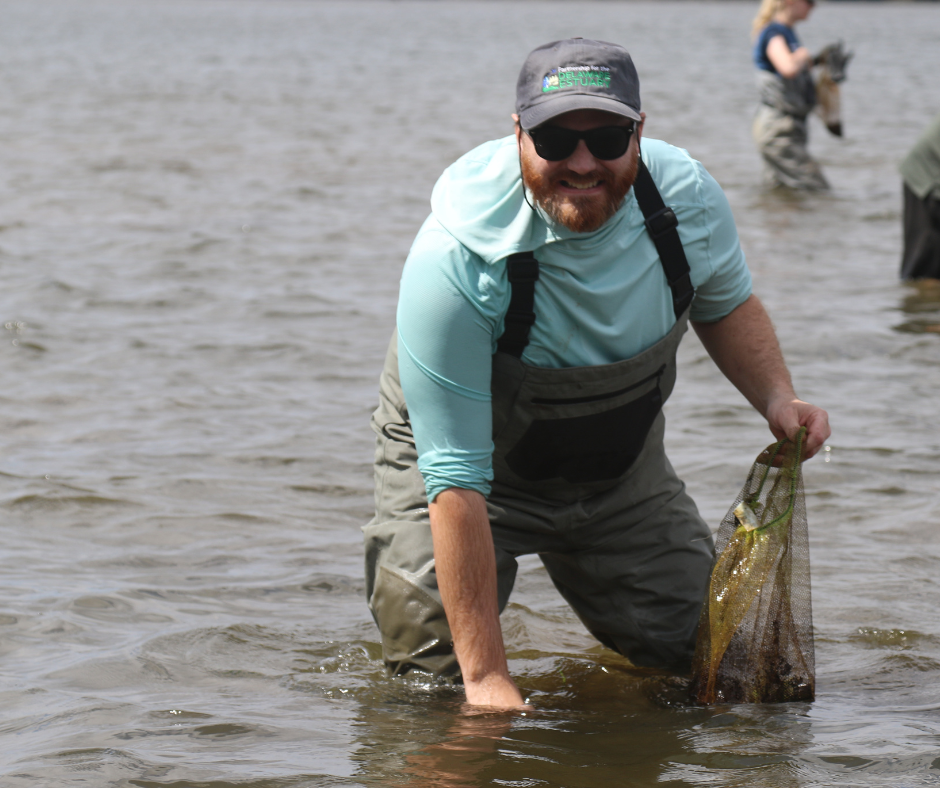
Freshwater mussels are bivalve mollusks just like oysters, clams, and saltwater mussels. Unlike saltwater bivalves, freshwater mussels live in our local streams and rivers and provide many benefits to our natural ecosystem.
Oysters
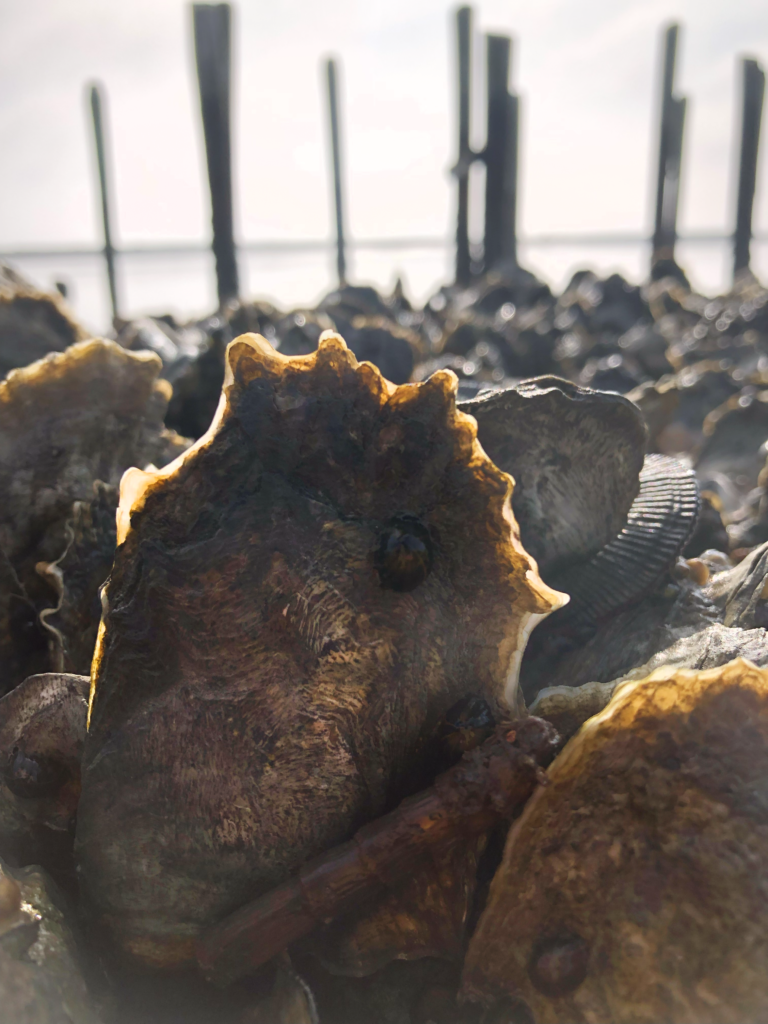
The eastern oyster (Crassostrea virginica) lives in estuaries along the Atlantic and Gulf coasts and has served as an important food supply for centuries. While oysters are prized for their meat at the dinner table, they also play an important role in nature as “filter-feeders,” just like other clams, saltwater mussels, and freshwater mussels.
Recurring Extreme Weather Events
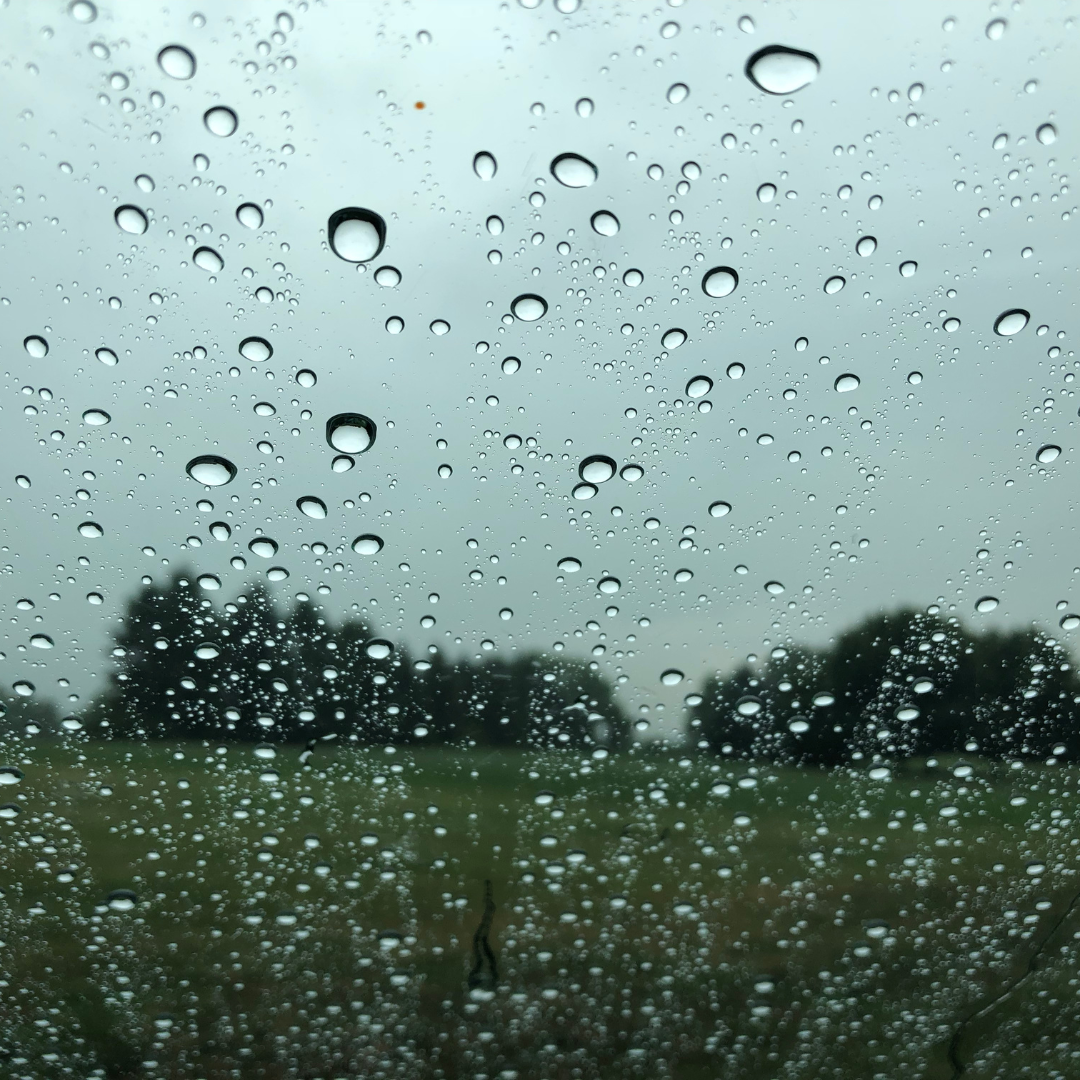
For the Delaware Estuary, recurring extreme weather events will require adapting to rising waters from the sea and land. Coastal communities in particular need to be aware of sea level rise projections when planning for the future of their neighborhoods.
Mussels Propagation
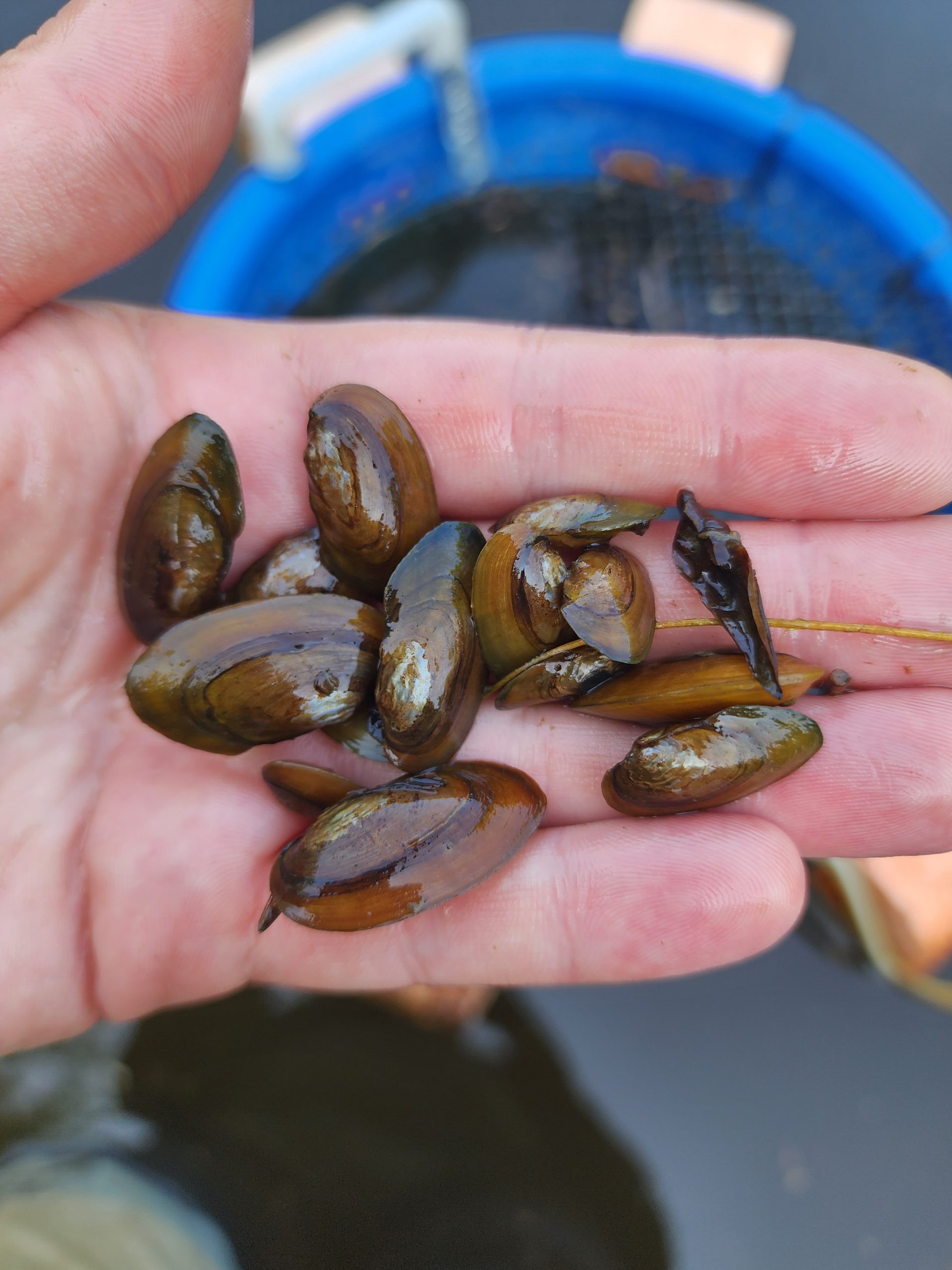
Partnership for the Delaware Estuary (PDE) and the Pennsylvania Infrastructure Investment Authority (PENNVEST) have signed a multi-million dollar funding agreement for the development and construction of a large-scale freshwater mussel hatchery and research center. For more information, see the freshwater mussels page.